
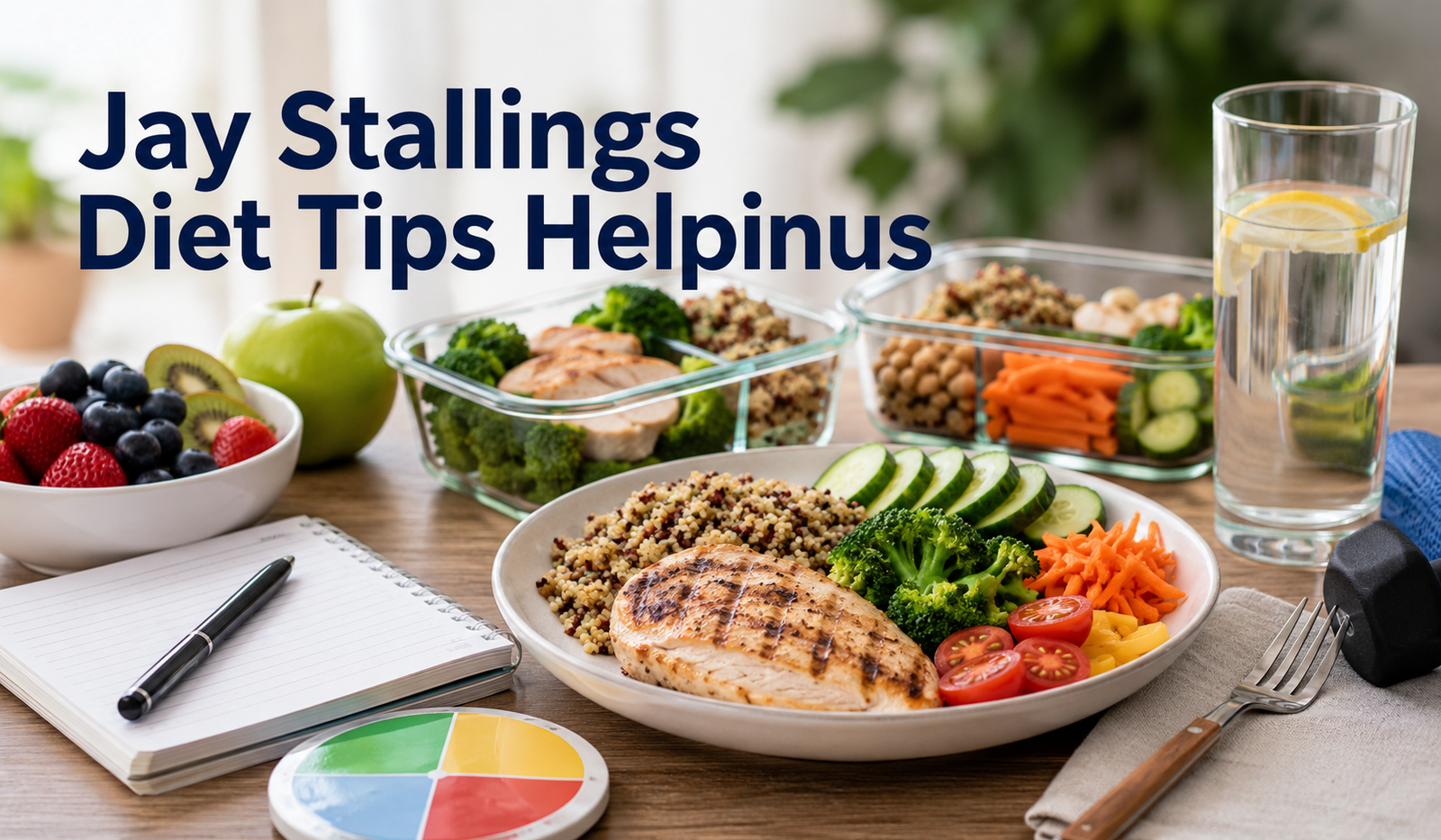
Jay Stallings Diet Tips Helpinus for Healthy Eating
Jay Stallings diet tips on Helpinus, including balanced meals, protein, portion control, hydration, meal prep, exercise, and sustainable habits. The guidance also encourages people to adjust food intake according to their activity level and personal goals. Rather than promising instant weight loss, the approach places more emphasis on gradual progress and habits that can fit into normal life.
The Main Idea Behind the Approach
At its heart, the plan is about making better decisions consistently. A typical meal combines a protein source with vegetables and a sensible portion of carbohydrates, while healthy fats are used in moderation. This gives meals structure without requiring every ingredient to be weighed or every calorie to be tracked forever. For many people, that simplicity can make healthy eating feel less overwhelming.
Focus on Whole Foods First
One of the clearest themes in the Helpinus material is choosing whole or minimally processed foods more often. Vegetables, fruit, whole grains, beans, nuts, seeds, lean proteins, and other nutrient-dense foods form the foundation. Processed snacks, sugary drinks, fried fast food, and foods high in added sugar are limited rather than treated as everyday staples.
Why Food Quality Matters
Food quality matters because calories are only one part of eating well. A meal containing vegetables, protein, and whole grains generally offers more fiber and nutrients than a meal built mostly around highly processed foods. It can also be easier to feel satisfied when meals contain a useful combination of protein, fiber, and healthy fats.
Keep Protein in Your Meals
Protein is another important part of the Jay Stallings diet framework. Helpinus recommends including protein throughout the day, with examples such as eggs, Greek yogurt, chicken, fish, tofu, legumes, and other suitable choices. Protein can make meals more satisfying and is also important for maintaining and repairing muscle tissue.
Easy Protein Choices
You do not need an expensive supplement collection to increase protein. Eggs at breakfast, yogurt as a snack, beans or chicken at lunch, and fish, tofu, or another lean protein at dinner can provide a simple foundation. The best choice is usually the one that fits your dietary preferences, budget, and routine well enough to become a regular habit.
Use Portion Control Without Obsessing
Portion control is a major part of the Helpinus approach. Instead of requiring people to measure everything forever, the guides describe simple visual methods such as using the palm for protein, a cupped hand for carbohydrates, a thumb-sized portion for fats, and generous servings of vegetables.
The Plate Method
A simple plate can make portion control much easier. Think of roughly half the plate as vegetables, one quarter as protein, and the remaining quarter as whole grains or another nutritious carbohydrate. A small amount of healthy fat can then round out the meal. It is not a rigid formula, but it gives you a useful starting point when serving food.
Choose Carbohydrates More Carefully
The goal is not necessarily to eliminate carbohydrates. Instead, the guidance emphasizes better sources and sensible portions. Oats, brown rice, quinoa, potatoes, sweet potatoes, beans, fruit, and other minimally processed carbohydrate sources can fit comfortably into a balanced eating pattern. Refined sweets and highly processed carbohydrate-heavy foods are better treated as occasional choices.
Add Plenty of Vegetables
Vegetables provide fiber, vitamins, minerals, and variety without requiring huge amounts of calories. The Helpinus material encourages adding vegetables to meals regularly, with the plate method putting particular emphasis on making them a substantial part of the meal.
Make Vegetables Easier to Eat
The practical trick is preparation. Keep washed vegetables ready for quick meals, roast a large tray at once, or add frozen vegetables to rice, eggs, soups, or stir-fries. Healthy eating becomes much easier when the nutritious option is also the convenient option.
Do Not Forget Healthy Fats
Healthy fats can have a place in a balanced diet. Olive oil, avocado, nuts, seeds, and similar foods can add flavor and help make meals satisfying. The important point is portion awareness because calorie-dense foods can add up quickly even when their nutritional profile is good.
Hydration Is Part of the Routine
Water also plays a central role in the recommendations described by Helpinus. Drinking water throughout the day and choosing it instead of sugary beverages can be a simple way to improve everyday eating habits. The guidance favors plain or sparkling water and limits drinks that add substantial calories.
What About Sports Drinks?
Sports drinks are not automatically necessary for ordinary daily activity. For long or particularly intense exercise, electrolyte replacement may have a role, but individual needs vary. For most normal days, water remains a straightforward choice.
Build a Consistent Meal Schedule
Another useful idea is keeping meals relatively consistent. Helpinus describes a pattern involving three main meals with one or two snacks when needed. The exact schedule does not have to be identical for everyone. The purpose is to create a predictable routine that reduces random grazing and makes food decisions easier.
Breakfast Can Start the Day Strong
A balanced breakfast can combine protein and fiber instead of relying entirely on refined carbohydrates. Eggs with whole-grain toast and fruit, Greek yogurt with berries and oats, or a protein-rich smoothie are examples of meals that can provide a satisfying start.
A Simple Breakfast Example
Try eggs with vegetables and whole-grain toast, or Greek yogurt with berries and oats. The goal is not to copy one specific menu every day. It is to understand the structure: protein, fiber-rich food, and an appropriate amount of carbohydrates.
Lunch Should Be Filling, Not Heavy
Lunch can follow the same basic formula. Grilled chicken with salad and quinoa, chickpeas with vegetables and whole grains, or tofu with brown rice and steamed vegetables can all work. A balanced lunch can help prevent the familiar afternoon cycle of hunger followed by impulsive snacking.
Keep Snacks Purposeful
Snacking is not automatically bad. The question is why you are eating and what you choose. Fruit with yogurt, an apple with a modest amount of nut butter, hummus with vegetables, cottage cheese, or a small handful of nuts can be more useful than grabbing a sugary snack simply because it is nearby.
Listen to Hunger Signals
Mindful eating can help here. Before reaching for food, ask whether you are genuinely hungry, bored, stressed, or simply following a habit. You do not need to judge the answer. The point is to become more aware of why you are eating.
Dinner Can Stay Simple
Dinner does not need to become a complicated health-food project. A lean protein, plenty of vegetables, and a sensible serving of potatoes, rice, quinoa, or another carbohydrate can create a complete meal. Changing seasonings and cooking methods can also keep simple foods interesting.
Meal Prep Makes Healthy Eating Easier
Meal preparation is one of the most practical lessons in the Helpinus material. Planning a grocery list, cooking food in batches, and preparing portions ahead of time can reduce the number of decisions you have to make during a busy week.
A Simple Weekend Prep
You might cook chicken, beans, rice, or another protein and carbohydrate combination in advance, while washing vegetables and preparing a few quick snacks. You do not need to prepare seven identical meals. Preparing basic ingredients gives you enough flexibility to create different combinations throughout the week.
Adjust Food to Your Activity Level
Food requirements are not identical every day. Someone completing a hard workout may need more energy and carbohydrates than someone spending most of the day sitting. Helpinus describes adjusting portions according to activity and personal goals rather than following one fixed amount for everybody.
Weight Loss Requires a Calorie Deficit
When weight loss is the goal, calorie balance still matters. Helpinus describes a moderate calorie deficit rather than an extreme reduction, with one guide discussing a target around 10–20% below estimated maintenance calories.
That does not mean everyone should immediately adopt the same number. Maintenance needs vary with body size, age, sex, activity, and other factors. A personalized target is more useful than copying someone else’s calorie intake.
Do Not Chase Extremely Fast Results
One of the strongest ideas behind sustainable dieting is patience. Weight can move up and down because of water, food volume, sodium, digestion, and other factors. A single weigh-in tells you very little about long-term progress. Looking at trends over time is generally more useful.
Strength Training Can Complement the Diet
Diet is only one piece of the picture. The Helpinus guides also discuss regular activity and strength training as part of a broader approach to weight management and physical health.
Start With Manageable Exercise
You do not need to begin with an extreme workout schedule. Walking, basic resistance exercises, cycling, swimming, or other activities you enjoy can be useful. If strength training is new to you, beginning with simple movements and gradually increasing difficulty can be more realistic than trying to train intensely from day one.
Sleep Should Not Be Ignored
Healthy eating becomes harder when you are constantly exhausted. The Helpinus material includes sleep as part of the broader routine and describes aiming for roughly seven to eight hours.
Sleep will not magically burn fat, but good sleep supports energy, recovery, and the ability to stick with healthy routines. It is worth treating as part of the plan rather than an afterthought.
Track Progress Without Becoming Obsessed
Tracking can provide useful information. Depending on your goal, you might record body weight, meals, activity, strength, hunger, or energy levels. Helpinus describes reviewing progress periodically and making small adjustments rather than constantly changing the plan.
Look Beyond the Scale
The scale is only one measurement. Better energy, improved workout performance, more consistent meals, better-fitting clothes, and greater confidence around food can all indicate meaningful progress. Looking at several signals gives you a more complete picture.
Allow Some Flexibility
A diet becomes difficult when every meal feels like a test. The Helpinus guides allow flexibility around food preferences and occasional treats. One of the guides specifically describes allowing a flexible meal each week.
That idea matters because real life includes birthdays, restaurants, family meals, holidays, and unexpected plans. A sustainable eating pattern needs room for those moments.
Make Healthy Eating Fit Your Culture
There is no requirement for a healthy diet to look like a particular Western meal plan. The same principles can work with many cuisines. Rice, lentils, vegetables, yogurt, fish, chicken, beans, whole grains, and traditional home-cooked foods can all fit into a balanced pattern when portions and overall nutrition are considered.
How to Start These Diet Tips Today
Start smaller than you think. Choose one or two habits for the first week instead of attempting a complete lifestyle transformation. For example, replace sugary drinks with water, add vegetables to lunch and dinner, include protein at breakfast, or prepare two meals ahead of time. Once those habits feel normal, build from there.
A Simple Day Inspired by the Approach
A practical day could begin with eggs, vegetables, whole-grain toast, and water. Lunch might be grilled chicken, a large salad, and quinoa. An afternoon snack could be fruit with yogurt. Dinner could feature baked fish, roasted vegetables, and a moderate serving of brown rice. The exact foods can change; what matters is the balance and portion awareness.
Who May Find These Tips Useful?
The approach may appeal to people who dislike complicated diets and want a straightforward framework for improving their eating habits. It can also help busy people who benefit from meal preparation and simple portion cues. However, individual dietary needs differ, especially for people with medical conditions, food allergies, eating disorders, pregnancy-related nutritional needs, or specific performance goals.
Are Jay Stallings Diet Tips a Medical Diet?
No. The information described on Helpinus should not be treated as a personalized medical prescription. Helpinus itself presents its content as practical nutrition and wellness guidance, while its diet material recommends professional guidance when medical conditions or individual needs require it.
If you have a medical condition or take medication that affects nutrition, it is sensible to discuss major dietary changes with a qualified healthcare professional or registered dietitian.
Common Mistakes to Avoid
The biggest mistake is turning a flexible eating framework into another restrictive diet. Cutting out entire food groups without a reason, dramatically reducing calories, skipping meals to compensate for overeating, or expecting immediate results can make the process harder to maintain. A better approach is to make small adjustments and give yourself enough time to see whether they work.
The Real Lesson From Jay Stallings Diet Tips Helpinus
The most useful takeaway is not a particular breakfast, calorie number, or food list. It is the idea of creating a repeatable routine. Eat mostly nutritious foods, include protein, make vegetables a regular part of meals, watch portions, stay hydrated, move your body, sleep adequately, and adjust your approach when something is not working. Helpinus repeatedly frames the Jay Stallings approach around consistency rather than quick fixes.
Conclusion
Jay Stallings diet tips Helpinus offer a practical framework for people who want healthier eating without relying on extreme rules. The approach centers on whole foods, protein, vegetables, reasonable portions, hydration, meal planning, physical activity, and long-term consistency. Those ideas are easier to apply because they can be adapted to different foods, schedules, budgets, and personal preferences.
The smartest way to use these tips is to treat them as a starting framework rather than a rigid prescription. Pick a few changes you can realistically maintain, watch how your body and habits respond, and adjust gradually. Sustainable nutrition is rarely about finding the perfect diet. It is about building an ordinary routine that keeps working long after the initial motivation disappears.
FAQs About Jay Stallings Diet Tips Helpinus
What are Jay Stallings diet tips on Helpinus?
The tips described on Helpinus focus on whole foods, regular protein, vegetables, portion control, hydration, meal planning, activity, and sustainable habits rather than extreme dieting.
Does the Jay Stallings approach support weight loss?
Yes. Helpinus describes moderate calorie control, portion awareness, protein intake, regular activity, and progress tracking as parts of its weight-loss framework.
What foods are emphasized?
The guidance emphasizes foods such as vegetables, fruits, whole grains, legumes, lean proteins, nuts, seeds, and other minimally processed foods.
Does it require counting calories?
Not necessarily for everyone. The guides discuss calorie targets for specific goals but also describe visual portion methods that can make everyday eating simpler.
Can I have snacks while following the plan?
Yes. The Helpinus material includes one or two snacks when needed and suggests choices such as fruit, yogurt, nuts, hummus, or other nutrient-dense foods.
Read also: Moxpuz9.4.0.5 Is It Safe or a Security Risk?



One thought on “Jay Stallings Diet Tips Helpinus for Healthy Eating”